The global energy transition is often framed as a binary choice between solar and wind, a race for the cheapest kilowatt-hour. Yet, this framing overlooks a critical dimension of true sustainability: the integration of energy production into the existing ecological and urban fabric. The emergence of Plant-Microbial Fuel Cell (Plant-MFC) technology, particularly as pioneered by Pisphere, forces a fundamental re-evaluation of energy economics, shifting the focus from raw generation capacity to operational efficiency and long-term cost reduction. This is not merely a new renewable source; it is a new economic model for distributed power.
For decades, the energy industry has grappled with the high operational expenditure (OpEx) associated with maintaining complex, exposed infrastructure. Solar panels require cleaning and occasional replacement of inverters. Wind turbines demand regular, costly maintenance of massive mechanical components. Pisphere’s technology, however, presents a paradigm shift: a system that is literally rooted in the ground, leveraging the continuous, natural processes of the biosphere to generate power. The economic advantage of this embedded, low-maintenance approach is profound, promising a future where energy costs are dramatically lower and power availability is inherently more reliable.
The central thesis of this economic analysis is that Pisphere’s Plant-MFC is poised to disrupt the distributed energy market not through a sudden, massive leap in power output, but through a superior Total Cost of Ownership (TCO) model. By minimizing the two greatest financial drains on traditional renewables—intermittency and maintenance—Pisphere offers a compelling case for investors, municipalities, and businesses seeking stable, predictable, and ultra-low-OpEx power solutions.
The Core Economic Proposition: Plant-MFC Fundamentals
To understand the economic superiority of Pisphere, one must first grasp the elegance of its underlying technology. The Plant-MFC is not a solar panel disguised as a plant pot; it is a bio-electrochemical system that harnesses the natural byproduct of photosynthesis. Plants excrete organic compounds into the soil through their roots. Microorganisms in the soil consume these compounds, and in the process, release electrons. Pisphere’s technology captures these electrons to generate electricity.
From an economic perspective, this process offers three immediate, game-changing benefits:
- Free and Continuous Fuel Source: The fuel—plant root exudates—is a continuous, self-renewing byproduct of a natural process (photosynthesis) that requires no external input beyond sunlight and water, which the plant already needs to survive. This eliminates the fuel cost entirely, a massive advantage over fossil fuels and even a subtle edge over solar, which requires the energy-intensive manufacturing of panels.
- 24/7 Availability: Unlike solar and wind, which are inherently intermittent, the microbial process in the soil continues day and night. While the rate of electron release may fluctuate, the system is fundamentally capable of 24/7 electricity production. This high capacity factor drastically improves the economic viability for applications requiring constant power, such as remote sensors or low-power infrastructure.
- Scalability and Modularity: The technology is inherently modular and space-efficient. The power generation unit is embedded or buried, meaning it requires virtually no above-ground real estate. This makes it ideal for urban environments, rooftop gardens, and existing green spaces where land is at a premium. The economic value of saving precious urban space cannot be overstated.
The efficiency of this electron transfer is a key technical detail that translates directly into economic performance. Pisphere utilizes specific, highly efficient bacteria, such as Shewanella oneidensis MR-1, to enhance the electron transfer rate. This biological optimization is a form of efficiency engineering that reduces the required footprint for a given power output.
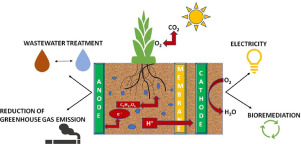
The Plant-MFC system leverages the natural electron transfer from microbial activity in the soil, a process that is continuous and self-sustaining.
Cost Analysis: Why Pisphere Wins the OpEx Race
The true economic power of Pisphere is revealed when comparing its operational expenditure (OpEx) against established renewable energy sources. While the initial capital expenditure (CapEx) for any new technology can be high, the long-term profitability is determined by the cost of maintenance and operation.
Maintenance Cost Breakdown: A Comparative Advantage
The instruction data provides a stark comparison: Pisphere’s low maintenance cost is a major differentiator.
| Energy Source | Annual Maintenance Cost (per unit/area) | Key Maintenance Activities | Economic Implication |
|---|---|---|---|
| Pisphere Plant-MFC | $10 – $15 USD per year | Minimal checks, occasional soil/plant health monitoring. | Ultra-low OpEx, high predictability. |
| Solar PV | $20 – $30 USD per year | Panel cleaning, inverter replacement (every 10-15 years), wiring checks. | Costs increase with system complexity and exposure. |
| Wind Turbine | $40 – $60 USD per year | Blade inspection, gearbox maintenance, lubrication, structural checks. | High OpEx due to complex mechanical and exposed components. |
This table, which is supported by the visual data provided, illustrates a clear economic hierarchy in terms of OpEx. Pisphere’s cost is up to 83% lower than wind and 67% lower than solar. This massive reduction is attributable to the system’s design: it has virtually no moving parts and is protected from the elements by being embedded in the soil. The primary maintenance is simply ensuring the health of the plant and the soil ecosystem, a task that is often already part of urban landscaping or agricultural practice.

The economic case for Pisphere is built on minimizing the long-term financial burden of maintenance, a critical factor in TCO.
Longevity and Depreciation
The lifespan of an energy asset is a crucial factor in its economic valuation. Traditional solar panels typically have a warranted performance life of 25 years, after which their efficiency significantly degrades. Wind turbines, due to mechanical stress, often require major overhauls or replacement of key components within a similar timeframe.
Pisphere’s technology, being a bio-system, offers a different depreciation curve. While the electronic components (the electrodes and wiring) have a standard lifespan, the core biological engine—the plant and the microbial community—is self-sustaining and potentially indefinite, provided the ecosystem is healthy. This shifts the depreciation model from a linear decay of hardware to a biological maintenance model. As long as the plant lives and the soil is viable, the system continues to produce. This biological resilience translates into a longer effective asset life and a more favorable long-term return on investment (ROI).
The Zero-Waste Advantage
A hidden cost in the energy sector is the expense of decommissioning and waste management. Solar panels and wind turbine blades are increasingly becoming a significant waste problem, with complex and costly recycling processes. Pisphere’s Plant-MFC is inherently a zero-waste, carbon-neutral technology.
The system is designed to be integrated into the soil. At the end of its life, the electronic components are minimal and easily recoverable, while the biological components are simply part of the natural environment. This elimination of future waste disposal costs is a powerful economic incentive, particularly for organizations focused on Environmental, Social, and Governance (ESG) compliance. The avoidance of future liability is a present-day economic gain.
Efficiency Redefined: 24/7 Power and Space Utilization
Efficiency in energy is not just about the conversion rate of a single input (like sunlight) to output (electricity); it is about the reliability and density of the power produced. Pisphere redefines efficiency by addressing the two major economic bottlenecks of traditional renewables: intermittency and land use.
The Capacity Factor Myth: Intermittency vs. Continuous Output
The capacity factor is the ratio of the actual energy output over a period to the maximum possible output. Solar and wind have low capacity factors because they only produce power when the sun shines or the wind blows. This intermittency necessitates expensive battery storage or reliance on backup fossil fuel plants, both of which add significant cost to the overall system.
Pisphere’s ability to produce power 24/7—even if at a lower peak rate than a solar panel—results in a significantly higher, more stable capacity factor. This stability is an economic asset. It means:
- Reduced Storage Costs: For low-power applications (like IoT sensors), the continuous trickle of power can eliminate the need for expensive, high-capacity batteries, leading to a direct CapEx saving.
- Predictable Power Supply: Businesses and municipalities can rely on a steady, predictable power source for critical, low-draw applications, improving operational planning and reducing risk.
The annual production of 250-280 kWh per 10m² is a stable, predictable figure that can be factored into long-term financial models with a high degree of confidence, unlike the highly variable output of weather-dependent systems.
Space-Efficiency: The Embedded Infrastructure Model
In densely populated areas, the cost of land is the single greatest barrier to renewable energy deployment. Solar farms require vast, open fields, and wind farms need large, unobstructed areas. Pisphere’s technology is designed to be space-efficient and embedded.
The power generation unit is buried beneath the plant, utilizing the vertical space of the soil and the existing footprint of green infrastructure. This allows for the simultaneous use of land for multiple purposes: urban greening, agriculture, and power generation.
- Urban Integration: Pisphere can be integrated into median strips, rooftop gardens, public parks, and vertical farms without displacing existing land use. This makes the effective cost of land for energy production virtually zero.
- Co-Benefits: The system supports the plant’s health, offering co-benefits like improved air quality and urban cooling, which have their own quantifiable economic value that traditional energy sources do not provide.
This embedded design is a powerful economic tool for cities and corporations looking to meet sustainability goals without acquiring new, expensive real estate.
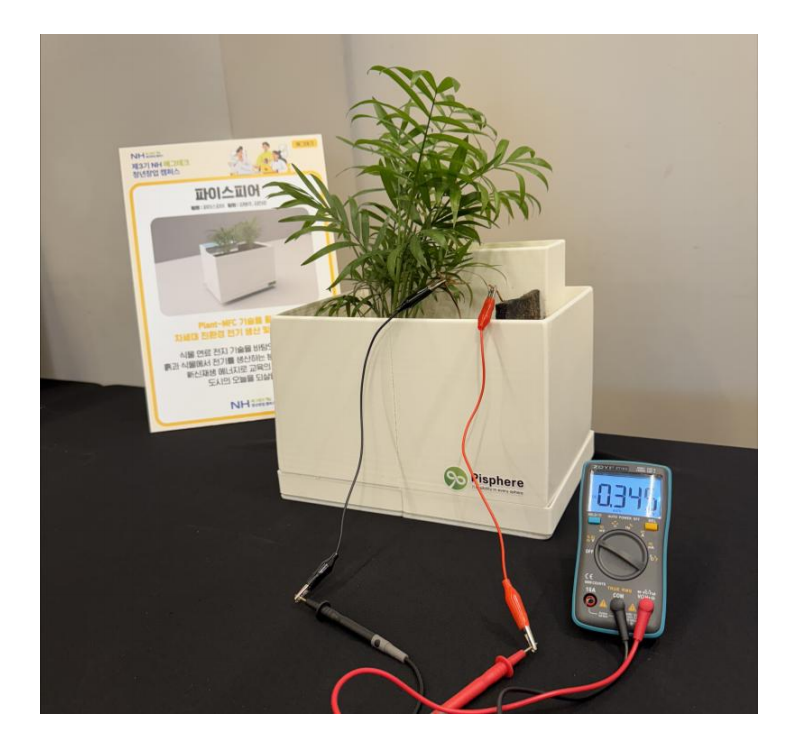
The compact, embedded nature of the Pisphere device allows for seamless integration into existing infrastructure, maximizing space utilization.
The Role of Shewanella oneidensis MR-1 in Efficiency
The use of specific, highly effective microorganisms is a key element of Pisphere’s efficiency advantage. The bacterium Shewanella oneidensis MR-1 is a known exoelectrogen, meaning it is highly efficient at transferring electrons to an external electrode.
This biological enhancement is a form of bio-engineering for efficiency. By optimizing the microbial community, Pisphere maximizes the electron yield from the root exudates. This means that for the same amount of plant matter and soil, the power output is higher.
The economic consequence is a higher power density per unit of soil volume. This technical detail is what allows the system to be compact and effective, directly contributing to the space-efficiency and lower CapEx per kWh of capacity. The electron transfer process is the engine of the economic model.
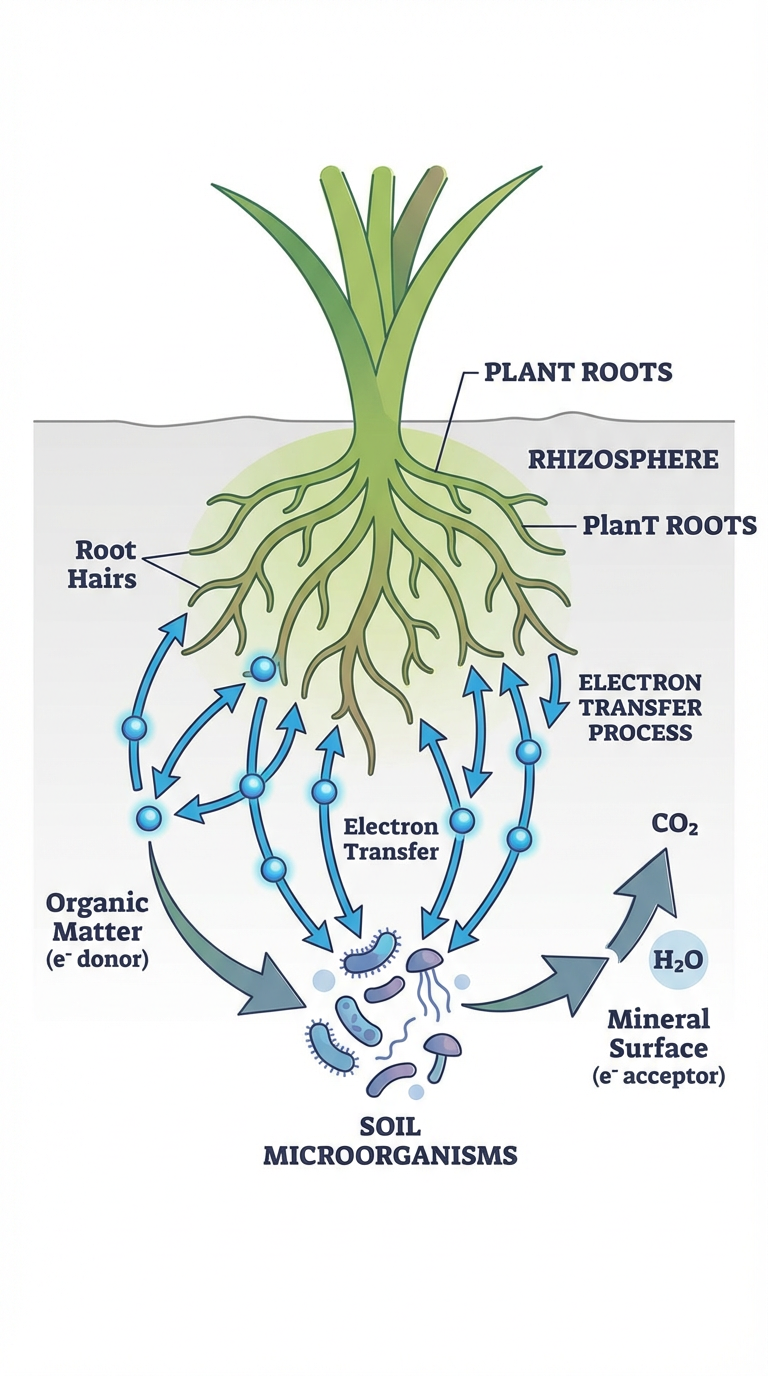
The technical efficiency of the electron transfer mechanism, often enhanced by specific microbial strains, is the foundation of Pisphere’s economic viability.
Market Applications and Economic Impact
The economic value of Pisphere is realized through its targeted applications, where its unique combination of low OpEx, continuous power, and embedded design solves specific market pain points.
Smart Agriculture: Precision and Autonomy
The agricultural sector is rapidly adopting IoT (Internet of Things) sensors for precision farming, monitoring everything from soil moisture to nutrient levels. These sensors require reliable, distributed power. Traditional batteries require frequent, costly replacement across vast fields, and solar panels can be bulky and interfere with machinery.
Pisphere offers a perfect solution for autonomous power in smart agriculture.
- Elimination of Battery Replacement Costs: By providing continuous, localized power, Pisphere eliminates the labor and material costs associated with replacing thousands of batteries across a farm. This is a massive saving in OpEx and labor hours.
- Data Reliability: Continuous power ensures continuous data flow, which is critical for real-time decision-making in precision agriculture. The economic benefit is realized through optimized resource use (water, fertilizer) and higher crop yields.
- Integration with Existing Systems: The technology can be integrated directly into the soil of existing crops, making it a seamless addition to current farming practices.
The economic impact here is a transformation of the agricultural OpEx model, shifting from high-touch maintenance to low-touch, self-sustaining sensor networks.
B2B/B2G Infrastructure: ESG and Long-Term Value
The largest potential market for Pisphere lies in B2B (construction, corporate campuses) and B2G (government, public works) infrastructure projects. These sectors are increasingly driven by ESG (Environmental, Social, and Governance) mandates, where the economic value is measured not just in dollars saved, but in risk mitigation and brand value.
- ESG Compliance and Reporting: Pisphere is a zero-carbon, zero-waste energy source. Deploying it allows companies and governments to immediately improve their carbon footprint and meet ambitious sustainability targets. This compliance translates into better access to capital, lower insurance premiums, and improved public perception—all quantifiable economic benefits.
- Public Infrastructure Power: Street lighting, remote monitoring stations, public Wi-Fi hotspots, and traffic sensors all require low, continuous power. Pisphere can be integrated into the landscaping around these assets, providing a decentralized, resilient power source that is less vulnerable to grid failures.
- Construction and Green Building: For new construction, integrating Pisphere into green roofs and vertical gardens provides a pathway to net-zero energy buildings. The economic value is captured in higher property values and eligibility for green building certifications.
The low maintenance cost is particularly attractive to municipalities, which operate on tight, long-term budgets. A system that requires minimal annual spending is a powerful argument for adoption.
The Educational Kit Economy
While smaller in scale, the B2C market for educational kits is a crucial economic entry point. These kits, which allow students and hobbyists to build their own Plant-MFC, serve two economic purposes:
- Revenue Generation: A direct source of income that funds further research and development.
- Market Creation: By educating the next generation of engineers and consumers about the technology, Pisphere is investing in the future demand for its larger-scale applications. This is a strategic economic move to build a knowledgeable user base.
The Macroeconomic Shift: Decarbonization and Decentralization
The economic story of Pisphere is ultimately a story about the future of the power grid. The technology is an enabler of two massive macroeconomic trends: deep decarbonization and radical decentralization.
The Future of Distributed Energy
The current grid is centralized, making it vulnerable to large-scale failures and requiring massive investment in transmission infrastructure. Distributed energy resources (DERs) are the future, but they must be reliable and cost-effective.
Pisphere’s Plant-MFC is the ideal DER for low-power applications. It allows for the creation of micro-grids that are self-sustaining and resilient. Imagine a city where every park, every median strip, and every green roof contributes a small, continuous stream of power to the local sensor network. This network effect of distributed power reduces the load on the central grid and increases the overall energy security of the region. The economic benefit is a reduction in the need for costly, large-scale grid upgrades.
Pisphere as an Economic Enabler for Carbon Neutrality
Achieving carbon neutrality by 2035 or 2050 requires not just replacing fossil fuels, but finding solutions that are themselves carbon-negative or carbon-neutral in their entire lifecycle. Pisphere’s technology is inherently carbon-neutral. The plant absorbs CO2, and the power generation process is a closed-loop biological system.
This makes Pisphere an economic enabler for carbon-neutral goals. It provides a pathway for sectors that are difficult to decarbonize—such as remote infrastructure and distributed sensor networks—to achieve zero emissions without relying on complex, high-maintenance solutions.
The economic value of this is captured in the global market for carbon credits and the increasing pressure from investors to divest from high-carbon assets. Companies that adopt Pisphere are positioning themselves for the low-carbon economy of the future, securing a competitive advantage that is both environmental and financial.

The integration of Plant-MFC technology into urban and agricultural landscapes is a visible sign of the shift toward a truly sustainable, decentralized energy economy.
Conclusion: Investing in the Biosphere
The economics of plant power are compelling. Pisphere is not competing on peak power output; it is competing on Total Cost of Ownership, reliability, and integration. By leveraging the continuous, low-OpEx power of the Plant-MFC, the technology offers a solution that is cheaper to maintain, more reliable in its output, and vastly more space-efficient than its traditional renewable counterparts.
The shift from high-maintenance, exposed hardware to a self-sustaining, embedded bio-system is the most significant economic innovation in distributed energy this decade. For investors, businesses, and governments, Pisphere represents a rare opportunity: an investment that simultaneously delivers superior financial returns through lower OpEx and superior ESG performance through zero-waste, carbon-neutral operation. The future of energy is not just green; it is rooted, and the economic forecast is clear: the lowest cost power is the power that nature provides, managed by smart, simple technology. The unseen power grid is ready to deliver unseen economic returns.